(619) 719-1087
Key Takeaways:
- A DUI case can potentially be dismissed in California if the prosecution cannot prove impairment or an unlawful blood alcohol concentration beyond a reasonable doubt, particularly when there are issues with the traffic stop, arrest, field sobriety tests, or chemical test evidence.
- DUI dismissals often stem from constitutional or procedural violations, including unlawful traffic stops, lack of probable cause, improper detentions, or evidence suppression under California Penal Code § 1538.5. When key evidence is excluded, prosecutors may no longer have a viable case.
- Breath and blood test results are not automatically reliable. Problems involving Title 17 compliance, device calibration, chain of custody, contamination, rising BAC levels, or medical conditions like GERD can weaken or invalidate chemical evidence in a DUI case.
- Field sobriety tests are subjective and can be affected by factors unrelated to intoxication, including injuries, fatigue, environmental conditions, or improper administration by law enforcement. Weak or improperly conducted tests may significantly reduce the strength of the prosecution’s case.
- An experienced DUI defense lawyer may challenge the legality of the stop and arrest, scrutinize police reports and body camera footage, evaluate chemical testing procedures, and use expert witnesses to create reasonable doubt that can lead to reduced charges or dismissal.
Table of Contents
The information on this page does not constitute legal advice. Consult an attorney for further guidance before using this information.
A DUI charge in California places an individual at risk of consequences that can affect nearly every part of daily life, from driving privileges and employment to financial stability and personal reputation. The legal standards governing DUI cases are complex, and the path toward dismissal is rarely straightforward. Each case turns on the quality of the evidence, the legality of the traffic stop, the reliability of chemical testing, and the procedures followed by law enforcement.
These issues require prompt and informed analysis because opportunities to challenge the prosecution’s case often arise early and can disappear quickly. For someone facing a DUI allegation in San Diego, understanding how the law works—and how a defense strategy is built—can make a meaningful difference in the outcome. Below, Rubin Law Office, P.C. explains the key factors that may lead to a dismissal, the role of constitutional and evidentiary challenges, and how an experienced San Diego DUI lawyer guides clients through a system that can otherwise feel overwhelming.

Get answers to your legal questions. Speak with a San Diego County criminal defense lawyer about your case > (619) 719-1087
How a DUI Case Can Be Dismissed Under California Law
Legal Basis for DUI Dismissals
California law allows a DUI case to be dismissed when the evidence does not meet the standards required for a conviction. The prosecution must prove guilt beyond a reasonable doubt under California Penal Code § 1096. When the evidence is insufficient, unreliable, or inadmissible, dismissal becomes a realistic outcome. Courts also have authority under California Penal Code § 1385 to dismiss a case when doing so serves the interests of justice.
Prosecutor’s Burden of Proof
The government must prove every element of a violation of Vehicle Code § 23152(a) or Vehicle Code § 23152(b). Weak indications of impairment, conflicting observations, or questionable test results may prevent the prosecution from meeting its burden. A case that lacks the required level of proof may be dismissed by the court.
Role of Evidence Suppression
If a defense attorney successfully challenges a stop, detention, search, or arrest through a motion to suppress under California Penal Code § 1538.5, the resulting evidence may be excluded. Once essential evidence is suppressed, the prosecution may be unable to proceed, and dismissal may follow.
Common Legal Grounds That Lead to a DUI Dismissal in California
Problems With Reasonable Suspicion
An officer must have reasonable suspicion to make a traffic stop. A stop that is not supported by specific, articulable facts violates the Fourth Amendment. Evidence gathered after an unlawful stop may be suppressed, which can lead to dismissal.
Lack of Probable Cause for Arrest
A DUI arrest must be supported by probable cause as required under Vehicle Code § 40300.5. If the officer’s observations are inconsistent, unclear, or contradicted by body-worn camera footage, the arrest may not be lawful. Without a valid arrest, the case may not survive.
Issues With Field Sobriety Tests
Standardized field sobriety tests must be administered properly to have value in court. Poor instructions, incorrect procedures, or reliance on non-standardized tests can reduce the reliability of the officer’s opinion about impairment.
Violations of Title 17 Requirements
Chemical testing for alcohol or drugs must comply with Title 17 of the California Code of Regulations. Mistakes involving calibration, maintenance, observation periods, or sample handling can render the results invalid and subject to exclusion.
Unreliable Chemical Test Evidence
Breath and blood tests can be undermined by rising blood alcohol levels, residual mouth alcohol, medical issues such as GERD, improper blood draw techniques, contamination, or errors in laboratory processing. When test reliability is compromised, prosecutors may not have enough evidence to move forward.
Officer Credibility Problems
Inconsistencies or omissions in police reports, conflicts with video evidence, or credibility concerns involving the officer can weaken the prosecution’s case. A DUI case that relies heavily on an unreliable witness may be dismissed.
Problems With the Traffic Stop That Can Result in a DUI Dismissal
Requirement for a Lawful Stop
A lawful traffic stop must be based on specific facts suggesting a traffic violation or criminal conduct. Stops rooted in vague impressions or assumptions violate the Fourth Amendment, and evidence gathered afterward may be excluded.
Consequences of an Unlawful Detention
If an officer prolongs a detention without a legitimate investigative purpose, the defense may challenge the detention through a motion to suppress under California Penal Code § 1538.5. Evidence obtained after an unlawful delay, including field sobriety tests or chemical tests, may be excluded, leaving the prosecution without proof.
Issues With Pretextual Stops
An officer may lawfully stop a vehicle for any observed traffic violation, even if the officer’s underlying motive is to investigate a possible DUI. This principle, recognized by the U.S. Supreme Court, allows pretextual stops as long as an objective legal basis exists. However, the officer may not prolong the stop or expand it into a DUI investigation unless additional facts give rise to reasonable suspicion of impairment. When a stop is extended without proper justification, any evidence gathered during the unlawful prolongation may be suppressed, which can weaken the prosecution’s case or lead to a dismissal.
Impact of Evidence Suppression on the Case
Once a court suppresses evidence resulting from an illegal stop, the prosecution often loses the proof needed to establish impairment or unlawful blood alcohol concentration. Without admissible evidence, dismissal may be the only available outcome.
Issues With Field Sobriety Tests That Often Lead to Dismissals
Subjective Nature of Field Sobriety Tests
Field sobriety tests depend heavily on an officer’s interpretation rather than objective measurements. Even standardized tests recognized by the National Highway Traffic Safety Administration have limitations and can be affected by factors unrelated to alcohol or drug use.
Problems With Test Administration
Field sobriety tests must be conducted under proper conditions and with correct instructions. Inadequate demonstrations, unclear directions, or performing tests on uneven ground can undermine their accuracy. When procedures are not followed, the results may be unreliable.
Influence of Medical Conditions and Environment
Physical conditions such as injuries, balance disorders, neurological issues, or fatigue can affect performance on field sobriety tests. Environmental conditions—such as lighting, footwear, wind, traffic noise, or road texture—can also produce misleading results. When these factors interfere, the tests may not reflect actual impairment.
Use of Non-Standardized Tests
Some officers rely on evaluations that are not standardized or scientifically supported. These non-validated assessments do not carry the same evidentiary weight as standardized tests and are easier to challenge in court. Weak test evidence may lead prosecutors to dismiss the case.
Reasons Breath Test or Blood Test Results May Be Thrown Out
Problems With Title 17 Compliance
Breath and blood testing in California must follow Title 17 of the California Code of Regulations. CALCRIM 2110 and 2111 both acknowledge that jurors may consider whether these regulations were followed when deciding what weight to give chemical test results. If the device was not properly calibrated, if maintenance logs are incomplete, or if the 15-minute observation period was not honored, the results may be challenged. Evidence of noncompliance can lead to exclusion or make it difficult for prosecutors to rely on the test.
Issues Involving Breath Test Reliability
Breath testing depends on accurate measurement of alcohol in deep lung air. Conditions such as residual mouth alcohol, dental work, mouth spray, vomiting, or acid reflux can skew the results. CALCRIM 2110 explains that impairment must be proven by reliable evidence, and unreliable breath testing weakens the prosecution’s case.
Problems With Blood Draws and Laboratory Procedures
Blood testing requires careful collection, handling, and analysis. Mistakes such as incorrect labeling, improper storage, contamination, or fermentation in the vial can undermine scientific reliability. CALCRIM 2111 permits jurors to question whether proper procedures were followed. If the chain of custody is incomplete or compromised, the test may not withstand a suppression motion.
Rising Blood Alcohol Concerns
A person’s blood alcohol level can continue to rise after driving. If the chemical test is taken later and no expert evidence supports the prosecution’s timeline, the test may not establish the BAC at the time of driving. When timing concerns create doubt about the accuracy of the results, dismissal can occur.
How Police Report Problems Can Lead to a DUI Being Dismissed
Inconsistencies Between Reports and Video Evidence
Body-worn camera footage may contradict the written police report. When officers describe slurred speech, poor balance, or bloodshot eyes, but the video does not support those descriptions, the credibility of the evidence suffers. CALCRIM 2110 requires the prosecution to prove that alcohol or drugs impaired driving ability. Inconsistent documentation may prevent it from showing.
Missing or Incorrect Information
Reports that fail to describe key facts, omit the basis for reasonable suspicion, or inaccurately document field sobriety testing can weaken the prosecution’s case. Errors relating to the timeline, location, or observations may reveal that the stop or arrest lacked legal justification.
Officer Credibility Issues
If the officer provides conflicting statements, relies on boilerplate language, or has a history of credibility problems, the defense may challenge the reliability of the state’s evidence. Because the prosecution must prove every element of the offense under Vehicle Code § 23152 and CALCRIM 2110 or 2111, credibility issues can make it impossible to sustain the charge.
How Lack of Proof of Driving Can Lead to a DUI Dismissal
Problems Proving the Driving Element
Under CALCRIM 2110 and 2111, the prosecution must prove that the person actually drove a vehicle. Under California law, “driving” requires volitional movement, although the movement may be slight. When officers find a person in a car without evidence of recent driving—such as in a parking lot, on the shoulder, or after an accident with no witnesses—the prosecution may fail to prove the driving element.
Circumstantial Evidence Insufficient in Some Cases
While the government may use circumstantial evidence to show driving, inconsistent or incomplete facts may not satisfy the standard required. CALCRIM explains that the manner of driving is only a factor to consider and cannot alone prove impairment. If prosecutors cannot establish who drove or when, dismissal is possible.
Common No-Driving Scenarios
Cases involving parked cars, mechanical issues, or situations where a passenger may have been the driver often result in insufficient evidence, making dismissal possible.
San Diego DUI Court Process and Dismissal
Early Case Stages Affect Outcomes
In San Diego, DUI cases typically begin with an arraignment and then proceed through multiple pre-trial hearings. Early negotiations may reveal weaknesses in the evidence, gaps in the officer’s report, or problems with the stop or arrest. Because prosecutors must prove the elements outlined in CALCRIM 2110 or 2111, weak cases may be dismissed before trial.
Importance of Motion Hearings
Defense attorneys can file motions to suppress under California Penal Code § 1538.5. These hearings test whether the stop, detention, or arrest was lawful and whether chemical testing complied with Title 17. If the court suppresses evidence necessary to prove impairment or unlawful BAC, dismissal often follows.
Influence of Local Policies and Practices
San Diego prosecutors may vary in how they handle borderline DUI cases, particularly those involving low BAC results, medical explanations, or conflicting officer observations. When local policies favor early resolution—or when the evidence is insufficient to satisfy CALCRIM’s elements—dismissal becomes more likely.
When Prosecutors May Agree to Dismiss a DUI Case
Insufficient Evidence to Support CALCRIM Elements
If the evidence does not support the required elements under CALCRIM 2110 or 2111—such as proof of driving, proof of impairment, or reliable BAC results—prosecutors may agree to dismiss.
Problems With the Traffic Stop or Arrest
When a motion to suppress reveals that the stop violated the Fourth Amendment or that the arrest lacked probable cause, prosecutors may dismiss because essential evidence cannot be used at trial.
Issues With Chemical Test Evidence
If chemical tests are compromised due to Title 17 problems, contamination, rising BAC factors, or laboratory errors, the prosecution may be unable to prove a violation of Vehicle Code § 23152(b).
Witness or Officer-Availability Problems
Cases may be dismissed when the officer fails to appear for motion hearings, when key witnesses are unavailable, or when credibility concerns arise. These weaknesses often prevent prosecutors from meeting their burden.
How a DUI Lawyer Fights to Get a DUI Dismissed in California
Challenging the Stop and Arrest
A defense lawyer evaluates whether the officer had reasonable suspicion for the stop and probable cause for the arrest. If either is lacking, a motion to suppress under California Penal Code § 1538.5 may remove the core evidence.
Examining Field Sobriety and Chemical Tests
Attorneys review field sobriety tests for procedural errors and evaluate chemical test results for Title 17 compliance. Because CALCRIM 2110 and 2111 require reliable, admissible evidence, weaknesses in testing can undermine the case.
Consulting Experts and Using Video Evidence
Experts may be used to question laboratory procedures, rising BAC issues, medical conditions, or environmental factors. Body-worn camera footage is reviewed to identify inconsistencies with the officer’s description of impairment.
Negotiations With Prosecutors
Defense counsel may persuade prosecutors to dismiss or reduce charges when the evidence falls short of proving the elements required under the Vehicle Code and CALCRIM instructions.
Why Creating Reasonable Doubt Can Lead to a DUI Being Thrown Out
Standard of Proof Under California Law
To convict someone of DUI, prosecutors must prove each element beyond a reasonable doubt. CALCRIM 220 defines this standard, and CALCRIM 2110 and 2111 specify what must be proven for DUI charges. Any meaningful doubt about impairment, BAC, driving, or test reliability can prevent a conviction.
How Doubt Leads to Dismissal
When the defense shows that alternative explanations exist—for physical symptoms, driving behavior, or BAC levels—the prosecution may lose confidence in the case. If the weaknesses are substantial, a judge or prosecutor may determine that dismissal is the most appropriate outcome.
San Diego Criminal Defense Attorney
Whether a DUI can be dismissed often turns on issues that must be examined immediately—such as the legality of the traffic stop, the adequacy of field sobriety testing, compliance with Title 17, and the reliability of any chemical results. Rubin Law Office, P.C., evaluates these factors as early as possible because potential defenses can be narrowed if they are not asserted promptly.
Attorney David Rubin’s experience handling a high volume of cases at trial, both as a former prosecutor and as a defense attorney, informs the firm’s ability to identify procedural and evidentiary problems that may undermine the state’s allegations. His role is to scrutinize each element the government must prove, challenge unsupported assumptions, and act decisively to protect the client’s interests. Because timing can influence whether a dismissal is achievable, anyone facing a DUI allegation should seek representation without delay. To learn whether a dismissal may be possible, individuals are encouraged to contact Rubin Law Office, P.C., San Diego DUI lawyers by calling (619) 719-1087 or contacting us online for a consultation.
The information on this page does not constitute legal advice. Consult an attorney for further guidance before using this information.
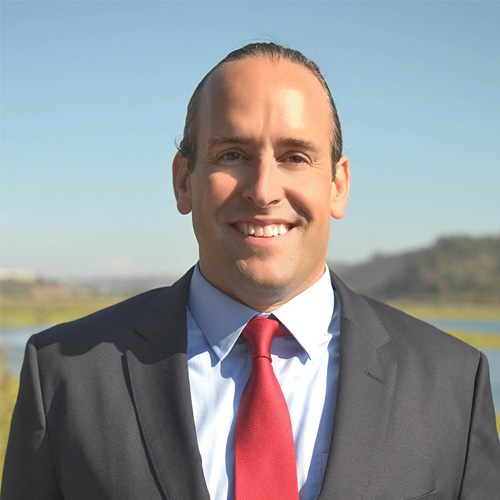
Attorney David Rubin
Attorney David Rubin is a criminal defense and personal injury lawyer based out of Carlsbad, CA. Attorney Rubin serves clients throughout San Diego County and has been practicing law for over a decade. When not working, David can be found surfing, attending CrossFit classes, or eating asado.
 (619) 719-1087
 EMAIL
EMAIL